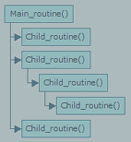
|
|
| |
| # lines: |
829 | | # code: |
829 | | # comment: | 0 | |
# blank: | 0 |
| # Variables: | 99 |
| # Callers: | 0 |
| # Callings: | 9 |
| # Words: | 438 |
| # Keywords: | 286 |
|
|
|
|
|
..
     .. Array Arguments ..
     ..
  Purpose
  =======
  PDGESVX uses the LU factorization to compute the solution to a real
  system of linear equations
        A(IA:IA+N-1,JA:JA+N-1) * X = B(IB:IB+N-1,JB:JB+NRHS-1),
  where A(IA:IA+N-1,JA:JA+N-1) is an N-by-N matrix and X and
  B(IB:IB+N-1,JB:JB+NRHS-1) are N-by-NRHS matrices.
  Error bounds on the solution and a condition estimate are also
  provided.
  Notes
  =====
  Each global data object is described by an associated description
  vector.  This vector stores the information required to establish
  the mapping between an object element and its corresponding process
  and memory location.
  Let A be a generic term for any 2D block cyclicly distributed array.
  Such a global array has an associated description vector DESCA.
  In the following comments, the character _ should be read as
  "of the global array".
  NOTATION        STORED IN      EXPLANATION
  --------------- -------------- --------------------------------------
  DTYPE_A(global) DESCA( DTYPE_ )The descriptor type.  In this case,
                                 DTYPE_A = 1.
  CTXT_A (global) DESCA( CTXT_ ) The BLACS context handle, indicating
                                 the BLACS process grid A is distribu-
                                 ted over. The context itself is glo-
                                 bal, but the handle (the integer
                                 value) may vary.
  M_A    (global) DESCA( M_ )    The number of rows in the global
                                 array A.
  N_A    (global) DESCA( N_ )    The number of columns in the global
                                 array A.
  MB_A   (global) DESCA( MB_ )   The blocking factor used to distribute
                                 the rows of the array.
  NB_A   (global) DESCA( NB_ )   The blocking factor used to distribute
                                 the columns of the array.
  RSRC_A (global) DESCA( RSRC_ ) The process row over which the first
                                 row of the array A is distributed.
  CSRC_A (global) DESCA( CSRC_ ) The process column over which the
                                 first column of the array A is
                                 distributed.
  LLD_A  (local)  DESCA( LLD_ )  The leading dimension of the local
                                 array.  LLD_A >= MAX(1,LOCr(M_A)).
  Let K be the number of rows or columns of a distributed matrix,
  and assume that its process grid has dimension p x q.
  LOCr( K ) denotes the number of elements of K that a process
  would receive if K were distributed over the p processes of its
  process column.
  Similarly, LOCc( K ) denotes the number of elements of K that a
  process would receive if K were distributed over the q processes of
  its process row.
  The values of LOCr() and LOCc() may be determined via a call to the
  ScaLAPACK tool function, NUMROC:
          LOCr( M ) = NUMROC( M, MB_A, MYROW, RSRC_A, NPROW ),
          LOCc( N ) = NUMROC( N, NB_A, MYCOL, CSRC_A, NPCOL ).
  An upper bound for these quantities may be computed by:
          LOCr( M ) <= ceil( ceil(M/MB_A)/NPROW )*MB_A
          LOCc( N ) <= ceil( ceil(N/NB_A)/NPCOL )*NB_A
  Description
  ===========
  In the following description, A denotes A(IA:IA+N-1,JA:JA+N-1),
  B denotes B(IB:IB+N-1,JB:JB+NRHS-1) and X denotes
  X(IX:IX+N-1,JX:JX+NRHS-1).
  The following steps are performed:
  1. If FACT = 'E', real scaling factors are computed to equilibrate
     the system:
        TRANS = 'N':  diag(R)*A*diag(C)     *inv(diag(C))*X = diag(R)*B
        TRANS = 'T': (diag(R)*A*diag(C))**T *inv(diag(R))*X = diag(C)*B
        TRANS = 'C': (diag(R)*A*diag(C))**H *inv(diag(R))*X = diag(C)*B
     Whether or not the system will be equilibrated depends on the
     scaling of the matrix A, but if equilibration is used, A is
     overwritten by diag(R)*A*diag(C) and B by diag(R)*B (if TRANS='N')
     or diag(C)*B (if TRANS = 'T' or 'C').
  2. If FACT = 'N' or 'E', the LU decomposition is used to factor the
     matrix A (after equilibration if FACT = 'E') as
        A = P * L * U,
     where P is a permutation matrix, L is a unit lower triangular
     matrix, and U is upper triangular.
  3. The factored form of A is used to estimate the condition number
     of the matrix A.  If the reciprocal of the condition number is
     less than machine precision, steps 4-6 are skipped.
  4. The system of equations is solved for X using the factored form
     of A.
  5. Iterative refinement is applied to improve the computed solution
     matrix and calculate error bounds and backward error estimates
     for it.
  6. If FACT = 'E' and equilibration was used, the matrix X is
     premultiplied by diag(C) (if TRANS = 'N') or diag(R) (if
     TRANS = 'T' or 'C') so that it solves the original system
     before equilibration.
  Arguments
  =========
  FACT    (global input) CHARACTER
          Specifies whether or not the factored form of the matrix
          A(IA:IA+N-1,JA:JA+N-1) is supplied on entry, and if not,
          whether the matrix A(IA:IA+N-1,JA:JA+N-1) should be
          equilibrated before it is factored.
          = 'F':  On entry, AF(IAF:IAF+N-1,JAF:JAF+N-1) and IPIV con-
                  tain the factored form of A(IA:IA+N-1,JA:JA+N-1).
                  If EQUED is not 'N', the matrix
                  A(IA:IA+N-1,JA:JA+N-1) has been equilibrated with
                  scaling factors given by R and C.
                  A(IA:IA+N-1,JA:JA+N-1), AF(IAF:IAF+N-1,JAF:JAF+N-1),
                  and IPIV are not modified.
          = 'N':  The matrix A(IA:IA+N-1,JA:JA+N-1) will be copied to
                  AF(IAF:IAF+N-1,JAF:JAF+N-1) and factored.
          = 'E':  The matrix A(IA:IA+N-1,JA:JA+N-1) will be equili-
                  brated if necessary, then copied to
                  AF(IAF:IAF+N-1,JAF:JAF+N-1) and factored.
  TRANS   (global input) CHARACTER
          Specifies the form of the system of equations:
          = 'N':  A(IA:IA+N-1,JA:JA+N-1) * X(IX:IX+N-1,JX:JX+NRHS-1)
                = B(IB:IB+N-1,JB:JB+NRHS-1)     (No transpose)
          = 'T':  A(IA:IA+N-1,JA:JA+N-1)**T * X(IX:IX+N-1,JX:JX+NRHS-1)
                = B(IB:IB+N-1,JB:JB+NRHS-1)  (Transpose)
          = 'C':  A(IA:IA+N-1,JA:JA+N-1)**H * X(IX:IX+N-1,JX:JX+NRHS-1)
                = B(IB:IB+N-1,JB:JB+NRHS-1)  (Transpose)
  N       (global input) INTEGER
          The number of rows and columns to be operated on, i.e. the
          order of the distributed submatrix A(IA:IA+N-1,JA:JA+N-1).
          N >= 0.
  NRHS    (global input) INTEGER
          The number of right-hand sides, i.e., the number of columns
          of the distributed submatrices B(IB:IB+N-1,JB:JB+NRHS-1) and
          X(IX:IX+N-1,JX:JX+NRHS-1).  NRHS >= 0.
  A       (local input/local output) DOUBLE PRECISION pointer into
          the local memory to an array of local dimension
          (LLD_A,LOCc(JA+N-1)).  On entry, the N-by-N matrix
          A(IA:IA+N-1,JA:JA+N-1).  If FACT = 'F' and EQUED is not 'N',
          then A(IA:IA+N-1,JA:JA+N-1) must have been equilibrated by
          the scaling factors in R and/or C.  A(IA:IA+N-1,JA:JA+N-1) is
          not modified if FACT = 'F' or  'N', or if FACT = 'E' and
          EQUED = 'N' on exit.
          On exit, if EQUED .ne. 'N', A(IA:IA+N-1,JA:JA+N-1) is scaled
          as follows:
          EQUED = 'R':  A(IA:IA+N-1,JA:JA+N-1) :=
                                      diag(R) * A(IA:IA+N-1,JA:JA+N-1)
          EQUED = 'C':  A(IA:IA+N-1,JA:JA+N-1) :=
                                      A(IA:IA+N-1,JA:JA+N-1) * diag(C)
          EQUED = 'B':  A(IA:IA+N-1,JA:JA+N-1) :=
                            diag(R) * A(IA:IA+N-1,JA:JA+N-1) * diag(C).
  IA      (global input) INTEGER
          The row index in the global array A indicating the first
          row of sub( A ).
  JA      (global input) INTEGER
          The column index in the global array A indicating the
          first column of sub( A ).
  DESCA   (global and local input) INTEGER array of dimension DLEN_.
          The array descriptor for the distributed matrix A.
  AF      (local input or local output) DOUBLE PRECISION pointer
          into the local memory to an array of local dimension
          (LLD_AF,LOCc(JA+N-1)).  If FACT = 'F', then
          AF(IAF:IAF+N-1,JAF:JAF+N-1) is an input argument and on
          entry contains the factors L and U from the factorization
          A(IA:IA+N-1,JA:JA+N-1) = P*L*U as computed by PDGETRF.
          If EQUED .ne. 'N', then AF is the factored form of the
          equilibrated matrix A(IA:IA+N-1,JA:JA+N-1).
          If FACT = 'N', then AF(IAF:IAF+N-1,JAF:JAF+N-1) is an output
          argument and on exit returns the factors L and U from the
          factorization A(IA:IA+N-1,JA:JA+N-1) = P*L*U of the original
          matrix A(IA:IA+N-1,JA:JA+N-1).
          If FACT = 'E', then AF(IAF:IAF+N-1,JAF:JAF+N-1) is an output
          argument and on exit returns the factors L and U from the
          factorization A(IA:IA+N-1,JA:JA+N-1) = P*L*U of the equili-
          brated matrix A(IA:IA+N-1,JA:JA+N-1) (see the description of
          A(IA:IA+N-1,JA:JA+N-1) for the form of the equilibrated
          matrix).
  IAF     (global input) INTEGER
          The row index in the global array AF indicating the first
          row of sub( AF ).
  JAF     (global input) INTEGER
          The column index in the global array AF indicating the
          first column of sub( AF ).
  DESCAF  (global and local input) INTEGER array of dimension DLEN_.
          The array descriptor for the distributed matrix AF.
  IPIV    (local input or local output) INTEGER array, dimension
          LOCr(M_A)+MB_A. If FACT = 'F', then IPIV is an input argu-
          ment and on entry contains the pivot indices from the fac-
          torization A(IA:IA+N-1,JA:JA+N-1) = P*L*U as computed by
          PDGETRF; IPIV(i) -> The global row local row i was
          swapped with.  This array must be aligned with
          A( IA:IA+N-1, * ).
          If FACT = 'N', then IPIV is an output argument and on exit
          contains the pivot indices from the factorization
          A(IA:IA+N-1,JA:JA+N-1) = P*L*U of the original matrix
          A(IA:IA+N-1,JA:JA+N-1).
          If FACT = 'E', then IPIV is an output argument and on exit
          contains the pivot indices from the factorization
          A(IA:IA+N-1,JA:JA+N-1) = P*L*U of the equilibrated matrix
          A(IA:IA+N-1,JA:JA+N-1).
  EQUED   (global input or global output) CHARACTER
          Specifies the form of equilibration that was done.
          = 'N':  No equilibration (always true if FACT = 'N').
          = 'R':  Row equilibration, i.e., A(IA:IA+N-1,JA:JA+N-1) has
                  been premultiplied by diag(R).
          = 'C':  Column equilibration, i.e., A(IA:IA+N-1,JA:JA+N-1)
                  has been postmultiplied by diag(C).
          = 'B':  Both row and column equilibration, i.e.,
                  A(IA:IA+N-1,JA:JA+N-1) has been replaced by
                  diag(R) * A(IA:IA+N-1,JA:JA+N-1) * diag(C).
          EQUED is an input variable if FACT = 'F'; otherwise, it is an
          output variable.
  R       (local input or local output) DOUBLE PRECISION array,
                                                  dimension LOCr(M_A).
          The row scale factors for A(IA:IA+N-1,JA:JA+N-1).
          If EQUED = 'R' or 'B', A(IA:IA+N-1,JA:JA+N-1) is multiplied
          on the left by diag(R); if EQUED='N' or 'C', R is not acces-
          sed.  R is an input variable if FACT = 'F'; otherwise, R is
          an output variable.
          If FACT = 'F' and EQUED = 'R' or 'B', each element of R must
          be positive.
          R is replicated in every process column, and is aligned
          with the distributed matrix A.
  C       (local input or local output) DOUBLE PRECISION array,
                                                  dimension LOCc(N_A).
          The column scale factors for A(IA:IA+N-1,JA:JA+N-1).
          If EQUED = 'C' or 'B', A(IA:IA+N-1,JA:JA+N-1) is multiplied
          on the right by diag(C); if EQUED = 'N' or 'R', C is not
          accessed.  C is an input variable if FACT = 'F'; otherwise,
          C is an output variable.  If FACT = 'F' and EQUED = 'C' or
          'B', each element of C must be positive.
          C is replicated in every process row, and is aligned with
          the distributed matrix A.
  B       (local input/local output) DOUBLE PRECISION pointer
          into the local memory to an array of local dimension
          (LLD_B,LOCc(JB+NRHS-1) ).  On entry, the N-by-NRHS right-hand
          side matrix B(IB:IB+N-1,JB:JB+NRHS-1). On exit, if
          EQUED = 'N', B(IB:IB+N-1,JB:JB+NRHS-1) is not modified; if
          TRANS = 'N' and EQUED = 'R' or 'B', B is overwritten by
          diag(R)*B(IB:IB+N-1,JB:JB+NRHS-1); if TRANS = 'T' or 'C'
          and EQUED = 'C' or 'B', B(IB:IB+N-1,JB:JB+NRHS-1) is over-
          written by diag(C)*B(IB:IB+N-1,JB:JB+NRHS-1).
  IB      (global input) INTEGER
          The row index in the global array B indicating the first
          row of sub( B ).
  JB      (global input) INTEGER
          The column index in the global array B indicating the
          first column of sub( B ).
  DESCB   (global and local input) INTEGER array of dimension DLEN_.
          The array descriptor for the distributed matrix B.
  X       (local input/local output) DOUBLE PRECISION pointer
          into the local memory to an array of local dimension
          (LLD_X, LOCc(JX+NRHS-1)).  If INFO = 0, the N-by-NRHS
          solution matrix X(IX:IX+N-1,JX:JX+NRHS-1) to the original
          system of equations.  Note that A(IA:IA+N-1,JA:JA+N-1) and
          B(IB:IB+N-1,JB:JB+NRHS-1) are modified on exit if
          EQUED .ne. 'N', and the solution to the equilibrated system
          is inv(diag(C))*X(IX:IX+N-1,JX:JX+NRHS-1) if TRANS = 'N'
          and EQUED = 'C' or 'B', or
          inv(diag(R))*X(IX:IX+N-1,JX:JX+NRHS-1) if TRANS = 'T' or 'C'
          and EQUED = 'R' or 'B'.
  IX      (global input) INTEGER
          The row index in the global array X indicating the first
          row of sub( X ).
  JX      (global input) INTEGER
          The column index in the global array X indicating the
          first column of sub( X ).
  DESCX   (global and local input) INTEGER array of dimension DLEN_.
          The array descriptor for the distributed matrix X.
  RCOND   (global output) DOUBLE PRECISION
          The estimate of the reciprocal condition number of the matrix
          A(IA:IA+N-1,JA:JA+N-1) after equilibration (if done).  If
          RCOND is less than the machine precision (in particular, if
          RCOND = 0), the matrix is singular to working precision.
          This condition is indicated by a return code of INFO > 0.
  FERR    (local output) DOUBLE PRECISION array, dimension LOCc(N_B)
          The estimated forward error bounds for each solution vector
          X(j) (the j-th column of the solution matrix
          X(IX:IX+N-1,JX:JX+NRHS-1). If XTRUE is the true solution,
          FERR(j) bounds the magnitude of the largest entry in
          (X(j) - XTRUE) divided by the magnitude of the largest entry
          in X(j).  The estimate is as reliable as the estimate for
          RCOND, and is almost always a slight overestimate of the
          true error.  FERR is replicated in every process row, and is
          aligned with the matrices B and X.
  BERR    (local output) DOUBLE PRECISION array, dimension LOCc(N_B).
          The componentwise relative backward error of each solution
          vector X(j) (i.e., the smallest relative change in
          any entry of A(IA:IA+N-1,JA:JA+N-1) or
          B(IB:IB+N-1,JB:JB+NRHS-1) that makes X(j) an exact solution).
          BERR is replicated in every process row, and is aligned
          with the matrices B and X.
  WORK    (local workspace/local output) DOUBLE PRECISION array,
                                                    dimension (LWORK)
          On exit, WORK(1) returns the minimal and optimal LWORK.
  LWORK   (local or global input) INTEGER
          The dimension of the array WORK.
          LWORK is local input and must be at least
          LWORK = MAX( PDGECON( LWORK ), PDGERFS( LWORK ) )
                  + LOCr( N_A ).
          If LWORK = -1, then LWORK is global input and a workspace
          query is assumed; the routine only calculates the minimum
          and optimal size for all work arrays. Each of these
          values is returned in the first entry of the corresponding
          work array, and no error message is issued by PXERBLA.
  IWORK   (local workspace/local output) INTEGER array,
                                                  dimension (LIWORK)
          On exit, IWORK(1) returns the minimal and optimal LIWORK.
  LIWORK  (local or global input) INTEGER
          The dimension of the array IWORK.
          LIWORK is local input and must be at least
          LIWORK = LOCr(N_A).
          If LIWORK = -1, then LIWORK is global input and a workspace
          query is assumed; the routine only calculates the minimum
          and optimal size for all work arrays. Each of these
          values is returned in the first entry of the corresponding
          work array, and no error message is issued by PXERBLA.
  INFO    (global output) INTEGER
          = 0:  successful exit
          < 0:  if INFO = -i, the i-th argument had an illegal value
          > 0:  if INFO = i, and i is
                <= N:  U(IA+I-1,IA+I-1) is exactly zero.  The
                       factorization has been completed, but the
                       factor U is exactly singular, so the solution
                       and error bounds could not be computed.
                = N+1: RCOND is less than machine precision.  The
                       factorization has been completed, but the
                       matrix is singular to working precision, and
                       the solution and error bounds have not been
                       computed.
  =====================================================================
     .. Parameters ..
|
|
|
|
001 SUBROUTINE PDGESVX( FACT , TRANS , N , NRHS , A , IA , JA , DESCA , AF ,
002 $IAF , JAF , DESCAF , IPIV , EQUED , R , C , B , IB ,
003 $JB , DESCB , X , IX , JX , DESCX , RCOND , FERR ,
004 $BERR , WORK , LWORK , IWORK , LIWORK , INFO )
005
006 * -- ScaLAPACK routine(version 1.7) --
007 * University of Tennessee , Knoxville , Oak Ridge National Laboratory ,
008 * and University of California , Berkeley.
009 * December 31 , 1998
010
011 * .. Scalar Arguments ..
012 CHARACTER EQUED , FACT , TRANS
013 INTEGER IA , IAF , IB , INFO , IX , JA , JAF , JB , JX , LIWORK ,
014 $LWORK , N , NRHS
015 DOUBLE PRECISION RCOND
016 INTEGER BLOCK_CYCLIC_2D , CSRC_ , CTXT_ , DLEN_ , DTYPE_ ,
017 $LLD_ , MB_ , M_ , NB_ , N_ , RSRC_
018 PARAMETER( BLOCK_CYCLIC_2D = 1 , DLEN_ = 9 , DTYPE_ = 1 ,
019 $CTXT_ = 2 , M_ = 3 , N_ = 4 , MB_ = 5 , NB_ = 6 ,
020 $RSRC_ = 7 , CSRC_ = 8 , LLD_ = 9 )
021 DOUBLE PRECISION ONE , ZERO
022 PARAMETER( ONE = 1.0D + 0 , ZERO = 0.0D + 0 )
023 * ..
024 * .. Local Scalars ..
025 LOGICAL COLEQU , EQUIL , LQUERY , NOFACT , NOTRAN , ROWEQU
026 CHARACTER NORM
027 INTEGER CONWRK , I , IACOL , IAROW , IAFROW , IBROW , IBCOL ,
028 $ICOFFA , ICOFFB , ICOFFX , ICTXT , IDUMM ,
029 $IIA , IIB , IIX ,
030 $INFEQU , IROFFA , IROFFAF , IROFFB ,
031 $IROFFX , IXCOL , IXROW , J , JJA , JJB , JJX ,
032 $LCM , LCMQ ,
033 $LIWMIN , LWMIN , MYCOL , MYROW , NP , NPCOL , NPROW ,
034 $NQ , NQB , NRHSQ , RFSWRK
035 DOUBLE PRECISION AMAX , ANORM , BIGNUM , COLCND , RCMAX , RCMIN ,
036 $ROWCND , SMLNUM
037 * ..
038 * .. Local Arrays ..
039 INTEGER CDESC( DLEN_ ) , IDUM1( 5 ) , IDUM2( 5 )
040 * ..
041 * .. External Subroutines ..
042 EXTERNAL BLACS_GRIDINFO , CHK1MAT , DESCSET , PCHK2MAT ,
043 $DGEBR2D , DGEBS2D , DGAMN2D ,
044 $DGAMX2D , INFOG2L , PDCOPY , PDGECON ,
045 $PDGEEQU , PDGERFS , PDGETRF , PDGETRS ,
046 $PDLACPY , PDLAQGE , PXERBLA
047 * ..
048 * .. External Functions ..
049 LOGICAL LSAME
050 INTEGER ICEIL , ILCM , INDXG2P , NUMROC
051 DOUBLE PRECISION PDLAMCH , PDLANGE
052 EXTERNAL ICEIL , ILCM , INDXG2P , LSAME , NUMROC , PDLANGE ,
053 $PDLAMCH
054 * ..
055 * .. Intrinsic Functions ..
056 INTRINSIC DBLE , ICHAR , MAX , MIN , MOD
057 * ..
058 * .. Executable Statements ..
059
060 * Get grid parameters
061
062 ICTXT = DESCA( CTXT_ )
063 CALL BLACS_GRIDINFO( ICTXT , NPROW , NPCOL , MYROW , MYCOL )
064
065 * Test the input parameters
066
067 INFO = 0
068 IF( NPROW.EQ. - 1 ) THEN
068   069 INFO = - (800 + CTXT_)
070 ELSE
070
071 CALL
069 INFO = - (800 + CTXT_)
070 ELSE
070
071 CALL CHK1MAT( N , 3 , N , 3 , IA , JA , DESCA , 8 , INFO )
072 IF( LSAME( FACT , 'F' ) )
072
073 $ CALL CHK1MAT( N , 3 , N , 3 , IAF , JAF , DESCAF , 12 , INFO )
074 CALL CHK1MAT( N , 3 , NRHS , 4 , IB , JB , DESCB , 20 , INFO )
075 CALL CHK1MAT( N , 3 , NRHS , 4 , IX , JX , DESCX , 24 , INFO )
076 NOFACT = LSAME( FACT , 'N' )
077 EQUIL = LSAME( FACT , 'E' )
078 NOTRAN = LSAME( TRANS , 'N' )
079 IF( NOFACT .OR. EQUIL ) THEN
079
080 EQUED = 'N'
081 ROWEQU = .FALSE.
082 COLEQU = .FALSE.
083 ELSE
083
084 ROWEQU = LSAME( EQUED , 'R' ) .OR. LSAME( EQUED , 'B' )
085 COLEQU = LSAME( EQUED , 'C' ) .OR. LSAME( EQUED , 'B' )
086 SMLNUM = PDLAMCH( ICTXT , 'Safe minimum' )
087 BIGNUM = ONE / SMLNUM
088 END IF
089 IF( INFO.EQ.0 ) THEN
089
090 IAROW = INDXG2P( IA , DESCA( MB_ ) , MYROW , DESCA( RSRC_ ) ,
091 $ NPROW )
092 IAFROW = INDXG2P( IAF , DESCAF( MB_ ) , MYROW ,
093 $ DESCAF( RSRC_ ) , NPROW )
094 IBROW = INDXG2P( IB , DESCB( MB_ ) , MYROW , DESCB( RSRC_ ) ,
095 $ NPROW )
096 IXROW = INDXG2P( IX , DESCX( MB_ ) , MYROW , DESCX( RSRC_ ) ,
097 $ NPROW )
098 IROFFA = MOD( IA - 1 , DESCA( MB_ ) )
099 IROFFAF = MOD( IAF - 1 , DESCAF( MB_ ) )
100 ICOFFA = MOD( JA - 1 , DESCA( NB_ ) )
101 IROFFB = MOD( IB - 1 , DESCB( MB_ ) )
102 ICOFFB = MOD( JB - 1 , DESCB( NB_ ) )
103 IROFFX = MOD( IX - 1 , DESCX( MB_ ) )
104 ICOFFX = MOD( JX - 1 , DESCX( NB_ ) )
105 CALL INFOG2L( IA , JA , DESCA , NPROW , NPCOL , MYROW ,
106 $ MYCOL , IIA , JJA , IAROW , IACOL )
107 NP = NUMROC( N + IROFFA , DESCA( MB_ ) , MYROW , IAROW ,
108 $ NPROW )
109 IF( MYROW.EQ.IAROW )
109
110 $ NP = NP - IROFFA
111 NQ = NUMROC( N + ICOFFA , DESCA( NB_ ) , MYCOL , IACOL ,
112 $ NPCOL )
113 IF( MYCOL.EQ.IACOL )
113
114 $ NQ = NQ - ICOFFA
115 NQB = ICEIL( N + IROFFA , DESCA( NB_ )*NPCOL )
116 LCM = ILCM( NPROW , NPCOL )
117 LCMQ = LCM / NPCOL
118 CONWRK = 2*NP + 2*NQ + MAX( 2 , MAX( DESCA( NB_ )*
119 $ MAX( 1 , ICEIL( NPROW - 1 , NPCOL ) ) , NQ +
120 $ DESCA( NB_ )*
121 $ MAX( 1 , ICEIL( NPCOL - 1 , NPROW ) ) ) )
122 RFSWRK = 3*NP
123 IF( LSAME( TRANS , 'N' ) ) THEN
123
124 RFSWRK = RFSWRK + NP + NQ +
125 $ ICEIL( NQB , LCMQ )*DESCA( NB_ )
126 ELSE IF( LSAME( TRANS , 'T' ).OR.LSAME( TRANS , 'C' ) ) THEN
126
127 RFSWRK = RFSWRK + NP + NQ
128 END IF
129 LWMIN = MAX( CONWRK , RFSWRK )
130 WORK( 1 ) = DBLE( LWMIN )
131 LIWMIN = NP
132 IWORK( 1 ) = LIWMIN
133 IF( .NOT.NOFACT .AND. .NOT.EQUIL .AND.
133
134 $ .NOT.LSAME( FACT , 'F' ) ) THEN
135 INFO = - 1
136 ELSE IF( .NOT.NOTRAN .AND. .NOT.LSAME( TRANS , 'T' ) .AND.
136
137 $ .NOT. LSAME( TRANS , 'C' ) ) THEN
138 INFO = - 2
139 ELSE IF( IROFFA.NE.0 ) THEN
139
140 INFO = - 6
141 ELSE IF( ICOFFA.NE.0 .OR. IROFFA.NE.ICOFFA ) THEN
141
142 INFO = - 7
143 ELSE IF( DESCA( MB_ ).NE.DESCA( NB_ ) ) THEN
143
144 INFO = - (800 + NB_)
145 ELSE IF( IAFROW.NE.IAROW ) THEN
145
146 INFO = - 10
147 ELSE IF( IROFFAF.NE.0 ) THEN
147
148 INFO = - 10
149 ELSE IF( ICTXT.NE.DESCAF( CTXT_ ) ) THEN
149
150 INFO = - (1200 + CTXT_)
151 ELSE IF( LSAME( FACT , 'F' ) .AND. .NOT.
152 $( ROWEQU .OR. COLEQU .OR. LSAME( EQUED , 'N' ) ) ) THEN
152
153 INFO = - 13
154 ELSE
154
155 IF( ROWEQU ) THEN
155
156 RCMIN = BIGNUM
157 RCMAX = ZERO
158 DO 10 J = IIA , IIA + NP - 1
158
159 RCMIN = MIN( RCMIN , R( J ) )
160 RCMAX = MAX( RCMAX , R( J ) )
161 10 CONTINUE
161
162 CALL DGAMN2D( ICTXT , 'Columnwise' , ' ' , 1 , 1 , RCMIN ,
163 $ 1 , IDUMM , IDUMM , - 1 , - 1 , MYCOL )
164 CALL DGAMX2D( ICTXT , 'Columnwise' , ' ' , 1 , 1 , RCMAX ,
165 $ 1 , IDUMM , IDUMM , - 1 , - 1 , MYCOL )
166 IF( RCMIN.LE.ZERO ) THEN
166
167 INFO = - 14
168 ELSE IF( N.GT.0 ) THEN
168
169 ROWCND = MAX( RCMIN , SMLNUM ) /
170 $ MIN( RCMAX , BIGNUM )
171 ELSE
171
172 ROWCND = ONE
173 END IF
174 END IF
175 IF( COLEQU .AND. INFO.EQ.0 ) THEN
175
176 RCMIN = BIGNUM
177 RCMAX = ZERO
178 DO 20 J = JJA , JJA + NQ - 1
178
179 RCMIN = MIN( RCMIN , C( J ) )
180 RCMAX = MAX( RCMAX , C( J ) )
181 20 CONTINUE
181
182 CALL DGAMN2D( ICTXT , 'Rowwise' , ' ' , 1 , 1 , RCMIN ,
183 $ 1 , IDUMM , IDUMM , - 1 , - 1 , MYCOL )
184 CALL DGAMX2D( ICTXT , 'Rowwise' , ' ' , 1 , 1 , RCMAX ,
185 $ 1 , IDUMM , IDUMM , - 1 , - 1 , MYCOL )
186 IF( RCMIN.LE.ZERO ) THEN
186
187 INFO = - 15
188 ELSE IF( N.GT.0 ) THEN
188
189 COLCND = MAX( RCMIN , SMLNUM ) /
190 $ MIN( RCMAX , BIGNUM )
191 ELSE
191
192 COLCND = ONE
193 END IF
194 END IF
195 END IF
196 END IF
197
198 WORK( 1 ) = DBLE( LWMIN )
199 IWORK( 1 ) = LIWMIN
200 LQUERY =( LWORK.EQ. - 1 .OR. LIWORK.EQ. - 1 )
201 IF( INFO.EQ.0 ) THEN
201
202 IF( IBROW.NE.IAROW ) THEN
202
203 INFO = - 18
204 ELSE IF( IXROW.NE.IBROW ) THEN
204
205 INFO = - 22
206 ELSE IF( DESCB( MB_ ).NE.DESCA( NB_ ) ) THEN
206
207 INFO = - (2000 + NB_)
208 ELSE IF( ICTXT.NE.DESCB( CTXT_ ) ) THEN
208
209 INFO = - (2000 + CTXT_)
210 ELSE IF( DESCX( MB_ ).NE.DESCA( NB_ ) ) THEN
210
211 INFO = - (2400 + NB_)
212 ELSE IF( ICTXT.NE.DESCX( CTXT_ ) ) THEN
212
213 INFO = - (2400 + CTXT_)
214 ELSE IF( LWORK.LT.LWMIN .AND. .NOT.LQUERY ) THEN
214
215 INFO = - 29
216 ELSE IF( LIWORK.LT.LIWMIN .AND. .NOT.LQUERY ) THEN
216
217 INFO = - 31
218 END IF
219 IDUM1( 1 ) = ICHAR( FACT )
220 IDUM2( 1 ) = 1
221 IDUM1( 2 ) = ICHAR( TRANS )
222 IDUM2( 2 ) = 2
223 IF( LSAME( FACT , 'F' ) ) THEN
223
224 IDUM1( 3 ) = ICHAR( EQUED )
225 IDUM2( 3 ) = 14
226 IF( LWORK.EQ. - 1 ) THEN
226
227 IDUM1( 4 ) = - 1
228 ELSE
228
229 IDUM1( 4 ) = 1
230 END IF
231 IDUM2( 4 ) = 29
232 IF( LIWORK.EQ. - 1 ) THEN
232
233 IDUM1( 5 ) = - 1
234 ELSE
234
235 IDUM1( 5 ) = 1
236 END IF
237 IDUM2( 5 ) = 31
238 CALL PCHK2MAT( N , 3 , N , 3 , IA , JA , DESCA , 8 , N , 3 ,
239 $ NRHS , 4 , IB , JB , DESCB , 20 , 5 , IDUM1 ,
240 $ IDUM2 , INFO )
241 ELSE
241
242 IF( LWORK.EQ. - 1 ) THEN
242
243 IDUM1( 3 ) = - 1
244 ELSE
244
245 IDUM1( 3 ) = 1
246 END IF
247 IDUM2( 3 ) = 29
248 IF( LIWORK.EQ. - 1 ) THEN
248
249 IDUM1( 4 ) = - 1
250 ELSE
250
251 IDUM1( 4 ) = 1
252 END IF
253 IDUM2( 4 ) = 31
254 CALL PCHK2MAT( N , 3 , N , 3 , IA , JA , DESCA , 8 , N , 3 ,
255 $ NRHS , 4 , IB , JB , DESCB , 20 , 4 , IDUM1 ,
256 $ IDUM2 , INFO )
257 END IF
258 END IF
259 END IF
260
261 IF( INFO.NE.0 ) THEN
261
262 CALL PXERBLA( ICTXT , 'PDGESVX' , - INFO )
263 RETURN
264 ELSE IF( LQUERY ) THEN
264
265 RETURN
266 END IF
267
268 IF( EQUIL ) THEN
269
270 * Compute row and column scalings to equilibrate the matrix A.
271
271
272 CALL PDGEEQU ( N , N , A , IA , JA , DESCA , R , C , ROWCND , COLCND ,
273 $ AMAX , INFEQU )
274 IF( INFEQU.EQ.0 ) THEN
275
276 * Equilibrate the matrix.
277
277
278 CALL PDLAQGE ( N , N , A , IA , JA , DESCA , R , C , ROWCND , COLCND ,
279 $ AMAX , EQUED )
280 ROWEQU = LSAME( EQUED , 'R' ) .OR. LSAME( EQUED , 'B' )
281 COLEQU = LSAME( EQUED , 'C' ) .OR. LSAME( EQUED , 'B' )
282 END IF
283 END IF
284
285 * Scale the right - hand side.
286
287 CALL INFOG2L( IB , JB , DESCB , NPROW , NPCOL , MYROW , MYCOL , IIB ,
288 $ JJB , IBROW , IBCOL )
289 NP = NUMROC( N + IROFFB , DESCB( MB_ ) , MYROW , IBROW , NPROW )
290 NRHSQ = NUMROC( NRHS + ICOFFB , DESCB( NB_ ) , MYCOL , IBCOL , NPCOL )
291 IF( MYROW.EQ.IBROW )
291
292 $ NP = NP - IROFFB
293 IF( MYCOL.EQ.IBCOL )
293
294 $ NRHSQ = NRHSQ - ICOFFB
295
296 IF( NOTRAN ) THEN
296
297 IF( ROWEQU ) THEN
297
298 DO 40 J = JJB , JJB + NRHSQ - 1
298
299 DO 30 I = IIB , IIB + NP - 1
299
300 B( I + ( J - 1 )*DESCB( LLD_ ) ) = R( I )*
301 $ B( I + ( J - 1 )*DESCB( LLD_ ) )
302 30 CONTINUE
303 40 CONTINUE
303
304 END IF
305 ELSE IF( COLEQU ) THEN
306
307 * Transpose the Column scale factors
308
308
309 CALL DESCSET( CDESC , 1 , N + ICOFFA , 1 , DESCA( NB_ ) , MYROW ,
310 $ IACOL , ICTXT , 1 )
311 CALL PDCOPY( N , C , 1 , JA , CDESC , CDESC( LLD_ ) , WORK , IB , JB ,
312 $ DESCB , 1 )
313 IF( MYCOL.EQ.IBCOL ) THEN
313
314 CALL DGEBS2D( ICTXT , 'Rowwise' , ' ' , NP , 1 , WORK( IIB ) ,
315 $ DESCB( LLD_ ) )
316 ELSE
316
317 CALL DGEBR2D( ICTXT , 'Rowwise' , ' ' , NP , 1 , WORK( IIB ) ,
318 $ DESCB( LLD_ ) , MYROW , IBCOL )
319 END IF
320 DO 60 J = JJB , JJB + NRHSQ - 1
320
321 DO 50 I = IIB , IIB + NP - 1
321
322 B( I + ( J - 1 )*DESCB( LLD_ ) ) = WORK( I )*
323 $ B( I + ( J - 1 )*DESCB( LLD_ ) )
324 50 CONTINUE
325 60 CONTINUE
325
326 END IF
327
328 IF( NOFACT.OR.EQUIL ) THEN
329
330 * Compute the LU factorization of A.
331
331
332 CALL PDLACPY ( 'Full' , N , N , A , IA , JA , DESCA , AF , IAF , JAF ,
333 $ DESCAF )
334 CALL PDGETRF ( N , N , AF , IAF , JAF , DESCAF , IPIV , INFO )
335
336 * Return if INFO is non - zero.
337
338 IF( INFO.NE.0 ) THEN
338
339 IF( INFO.GT.0 )
339
340 $ RCOND = ZERO
341 RETURN
342 END IF
343 END IF
344
345 * Compute the norm of the matrix A.
346
347 IF( NOTRAN ) THEN
347
348 NORM = '1'
349 ELSE
349
350 NORM = 'I'
351 END IF
352 ANORM = PDLANGE( NORM , N , N , A , IA , JA , DESCA , WORK )
353
354 * Compute the reciprocal of the condition number of A.
355
356 CALL PDGECON ( NORM , N , AF , IAF , JAF , DESCAF , ANORM , RCOND , WORK ,
357 $ LWORK , IWORK , LIWORK , INFO )
358
359 * Return if the matrix is singular to working precision.
360
361 IF( RCOND.LT.PDLAMCH( ICTXT , 'Epsilon' ) ) THEN
361
362 INFO = IA + N
363 RETURN
364 END IF
365
366 * Compute the solution matrix X.
367
368 CALL PDLACPY ( 'Full' , N , NRHS , B , IB , JB , DESCB , X , IX , JX ,
369 $ DESCX )
370 CALL PDGETRS ( TRANS , N , NRHS , AF , IAF , JAF , DESCAF , IPIV , X , IX ,
371 $ JX , DESCX , INFO )
372
373 * Use iterative refinement to improve the computed solution and
374 * compute error bounds and backward error estimates for it.
375
376 CALL PDGERFS ( TRANS , N , NRHS , A , IA , JA , DESCA , AF , IAF , JAF ,
377 $ DESCAF , IPIV , B , IB , JB , DESCB , X , IX , JX , DESCX ,
378 $ FERR , BERR , WORK , LWORK , IWORK , LIWORK , INFO )
379
380 * Transform the solution matrix X to a solution of the original
381 * system.
382
383 CALL INFOG2L( IX , JX , DESCX , NPROW , NPCOL , MYROW , MYCOL , IIX ,
384 $ JJX , IXROW , IXCOL )
385 NP = NUMROC( N + IROFFX , DESCX( MB_ ) , MYROW , IXROW , NPROW )
386 NRHSQ = NUMROC( NRHS + ICOFFX , DESCX( NB_ ) , MYCOL , IXCOL , NPCOL )
387 IF( MYROW.EQ.IBROW )
387
388 $ NP = NP - IROFFX
389 IF( MYCOL.EQ.IBCOL )
389
390 $ NRHSQ = NRHSQ - ICOFFX
391
392 IF( NOTRAN ) THEN
392
393 IF( COLEQU ) THEN
394
395 * Transpose the column scaling factors
396
396
397 CALL DESCSET( CDESC , 1 , N + ICOFFA , 1 , DESCA( NB_ ) , MYROW ,
398 $ IACOL , ICTXT , 1 )
399 CALL PDCOPY( N , C , 1 , JA , CDESC , CDESC( LLD_ ) , WORK , IX ,
400 $ JX , DESCX , 1 )
401 IF( MYCOL.EQ.IBCOL ) THEN
401
402 CALL DGEBS2D( ICTXT , 'Rowwise' , ' ' , NP , 1 ,
403 $ WORK( IIX ) , DESCX( LLD_ ) )
404 ELSE
404
405 CALL DGEBR2D( ICTXT , 'Rowwise' , ' ' , NP , 1 ,
406 $ WORK( IIX ) , DESCX( LLD_ ) , MYROW , IBCOL )
407 END IF
408
409 DO 80 J = JJX , JJX + NRHSQ - 1
409
410 DO 70 I = IIX , IIX + NP - 1
410
411 X( I + ( J - 1 )*DESCX( LLD_ ) ) = WORK( I )*
412 $ X( I + ( J - 1 )*DESCX( LLD_ ) )
413 70 CONTINUE
414 80 CONTINUE
414
415 DO 90 J = JJX , JJX + NRHSQ - 1
415
416 FERR( J ) = FERR( J ) / COLCND
417 90 CONTINUE
417
418 END IF
419 ELSE IF( ROWEQU ) THEN
419
420 DO 110 J = JJX , JJX + NRHSQ - 1
420
421 DO 100 I = IIX , IIX + NP - 1
421
422 X( I + ( J - 1 )*DESCX( LLD_ ) ) = R( I )*
423 $ X( I + ( J - 1 )*DESCX( LLD_ ) )
424 100 CONTINUE
425 110 CONTINUE
425
426 DO 120 J = JJX , JJX + NRHSQ - 1
426
427 FERR( J ) = FERR( J ) / ROWCND
428 120 CONTINUE
428
429 END IF
430
431 WORK( 1 ) = DBLE( LWMIN )
432 IWORK( 1 ) = LIWMIN
433
434 RETURN
435
436 * End of PDGESVX
437
438 END43
91
|
|
Variables in Routine PDGESVX()
| Summary Report |
| Data Type | Quantity | Size(byte) |
| CHARACTER | 4 | 4 |
| DOUBLE PRECISION | 13 | 52 |
| INTEGER | 71 | 320 |
| LOGICAL | 7 | 7 |
| REAL | 4 | 16 |
| TOTAL | 99 | 399 |
List of Variables
CHARACTER
DOUBLE PRECISION
| AMAX | ANORM | BIGNUM | COLCND | ONE |
| PDLAMCH | PDLANGE | RCMAX | RCMIN | RCOND |
| ROWCND | SMLNUM | ZERO | | |
INTEGER
| BLOCK_CYCLIC_2D | CDESC( DLEN_ ) | CONWRK | CSRC_ | CTXT_ |
| DLEN_ | DTYPE_ | I | IA | IACOL |
| IAF | IAFROW | IAROW | IB | IBCOL |
| IBROW | ICEIL | ICOFFA | ICOFFB | ICOFFX |
| ICTXT | IDUM1( 5 ) | IDUM2( 5 ) | IDUMM | IIA |
| IIB | IIX | ILCM | INDXG2P | INFEQU |
| INFO | IROFFA | IROFFAF | IROFFB | IROFFX |
| IWORK | IX | IXCOL | IXROW | J |
| JA | JAF | JB | JJA | JJB |
| JJX | JX | LCM | LCMQ | LIWMIN |
| LIWORK | LLD_ | LWMIN | LWORK | M_ |
| MB_ | MYCOL | MYROW | N | N_ |
| NB_ | NP | NPCOL | NPROW | NQ |
| NQB | NRHS | NRHSQ | NUMROC | RFSWRK |
| RSRC_ | | | | |
LOGICAL
| COLEQU | EQUIL | LQUERY | LSAME | NOFACT |
| NOTRAN | ROWEQU | | | |
REAL
Variables Dependence Graph
Put the mouse over a right hand side variable to display the corresponding line of the dependence | | - | | - | - | | ANORM | <--- | IAANORM = PDLANGE( NORM, N, N, A, IA, JA, DESCA, WORK ), JAANORM = PDLANGE( NORM, N, N, A, IA, JA, DESCA, WORK ), NANORM = PDLANGE( NORM, N, N, A, IA, JA, DESCA, WORK ), NORMANORM = PDLANGE( NORM, N, N, A, IA, JA, DESCA, WORK ), PDLANGEANORM = PDLANGE( NORM, N, N, A, IA, JA, DESCA, WORK ), WORKANORM = PDLANGE( NORM, N, N, A, IA, JA, DESCA, WORK ) |
| B | <--- | IB( I+( J-1 )*DESCB( LLD_ ) ) = R( I )*{2B( I+( J-1 )*DESCB( LLD_ ) ) = WORK( I )*}, BB( I+( J-1 )*DESCB( LLD_ ) ) = R( I )*{2B( I+( J-1 )*DESCB( LLD_ ) ) = WORK( I )*}, JB( I+( J-1 )*DESCB( LLD_ ) ) = R( I )*{2B( I+( J-1 )*DESCB( LLD_ ) ) = WORK( I )*}, LLD_B( I+( J-1 )*DESCB( LLD_ ) ) = R( I )*{2B( I+( J-1 )*DESCB( LLD_ ) ) = WORK( I )*}, WORKB( I+( J-1 )*DESCB( LLD_ ) ) = WORK( I )* |
| BIGNUM | <--- | ONEBIGNUM = ONE / SMLNUM, SMLNUMBIGNUM = ONE / SMLNUM |
| COLCND | <--- | BIGNUMCOLCND = MAX( RCMIN, SMLNUM ) /, ONECOLCND = ONE, RCMAXCOLCND = MAX( RCMIN, SMLNUM ) /, RCMINCOLCND = MAX( RCMIN, SMLNUM ) /, SMLNUMCOLCND = MAX( RCMIN, SMLNUM ) / |
| COLEQU | <--- | EQUEDCOLEQU = LSAME( EQUED, 'C' ) .OR. LSAME( EQUED, 'B' ){2COLEQU = LSAME( EQUED, 'C' ) .OR. LSAME( EQUED, 'B' )}, BCOLEQU = LSAME( EQUED, 'C' ) .OR. LSAME( EQUED, 'B' ){2COLEQU = LSAME( EQUED, 'C' ) .OR. LSAME( EQUED, 'B' )}, LSAMECOLEQU = LSAME( EQUED, 'C' ) .OR. LSAME( EQUED, 'B' ){2COLEQU = LSAME( EQUED, 'C' ) .OR. LSAME( EQUED, 'B' )} |
| CONWRK | <--- | ICEILCONWRK = 2*NP + 2*NQ + MAX( 2, MAX( DESCA( NB_ )*, NB_CONWRK = 2*NP + 2*NQ + MAX( 2, MAX( DESCA( NB_ )*, NPCONWRK = 2*NP + 2*NQ + MAX( 2, MAX( DESCA( NB_ )*, NPCOLCONWRK = 2*NP + 2*NQ + MAX( 2, MAX( DESCA( NB_ )*, NPROWCONWRK = 2*NP + 2*NQ + MAX( 2, MAX( DESCA( NB_ )*, NQCONWRK = 2*NP + 2*NQ + MAX( 2, MAX( DESCA( NB_ )* |
| EQUED | <--- | NEQUED = 'N' |
| EQUIL | <--- | FACTEQUIL = LSAME( FACT, 'E' ), LSAMEEQUIL = LSAME( FACT, 'E' ) |
| FERR | <--- | FERRFERR( J ) = FERR( J ) / COLCND{2FERR( J ) = FERR( J ) / ROWCND}, JFERR( J ) = FERR( J ) / COLCND{2FERR( J ) = FERR( J ) / ROWCND}, COLCNDFERR( J ) = FERR( J ) / COLCND, ROWCNDFERR( J ) = FERR( J ) / ROWCND |
| I | <--- | IIBDO 30 I = IIB, IIB+NP-1{2DO 50 I = IIB, IIB+NP-1}, IIXDO 70 I = IIX, IIX+NP-1{2DO 100 I = IIX, IIX+NP-1}, NPDO 30 I = IIB, IIB+NP-1{2DO 50 I = IIB, IIB+NP-1, 3DO 70 I = IIX, IIX+NP-1, 4DO 100 I = IIX, IIX+NP-1} |
| IAFROW | <--- | IAFIAFROW = INDXG2P( IAF, DESCAF( MB_ ), MYROW,, INDXG2PIAFROW = INDXG2P( IAF, DESCAF( MB_ ), MYROW,, MB_IAFROW = INDXG2P( IAF, DESCAF( MB_ ), MYROW,, MYROWIAFROW = INDXG2P( IAF, DESCAF( MB_ ), MYROW,, NPROWIAFROW = INDXG2P( IAF, DESCAF( MB_ ), MYROW,, RSRC_IAFROW = INDXG2P( IAF, DESCAF( MB_ ), MYROW, |
| IAROW | <--- | IAIAROW = INDXG2P( IA, DESCA( MB_ ), MYROW, DESCA( RSRC_ ),, INDXG2PIAROW = INDXG2P( IA, DESCA( MB_ ), MYROW, DESCA( RSRC_ ),, MB_IAROW = INDXG2P( IA, DESCA( MB_ ), MYROW, DESCA( RSRC_ ),, MYROWIAROW = INDXG2P( IA, DESCA( MB_ ), MYROW, DESCA( RSRC_ ),, NPROWIAROW = INDXG2P( IA, DESCA( MB_ ), MYROW, DESCA( RSRC_ ),, RSRC_IAROW = INDXG2P( IA, DESCA( MB_ ), MYROW, DESCA( RSRC_ ), |
| IBROW | <--- | IBIBROW = INDXG2P( IB, DESCB( MB_ ), MYROW, DESCB( RSRC_ ),, INDXG2PIBROW = INDXG2P( IB, DESCB( MB_ ), MYROW, DESCB( RSRC_ ),, MB_IBROW = INDXG2P( IB, DESCB( MB_ ), MYROW, DESCB( RSRC_ ),, MYROWIBROW = INDXG2P( IB, DESCB( MB_ ), MYROW, DESCB( RSRC_ ),, NPROWIBROW = INDXG2P( IB, DESCB( MB_ ), MYROW, DESCB( RSRC_ ),, RSRC_IBROW = INDXG2P( IB, DESCB( MB_ ), MYROW, DESCB( RSRC_ ), |
| ICOFFA | <--- | JAICOFFA = MOD( JA-1, DESCA( NB_ ) ), NB_ICOFFA = MOD( JA-1, DESCA( NB_ ) ) |
| ICOFFB | <--- | JBICOFFB = MOD( JB-1, DESCB( NB_ ) ), NB_ICOFFB = MOD( JB-1, DESCB( NB_ ) ) |
| ICOFFX | <--- | JXICOFFX = MOD( JX-1, DESCX( NB_ ) ), NB_ICOFFX = MOD( JX-1, DESCX( NB_ ) ) |
| ICTXT | <--- | CTXT_ICTXT = DESCA( CTXT_ ) |
| IDUM1 | <--- | EQUEDIDUM1( 3 ) = ICHAR( EQUED ), FACTIDUM1( 1 ) = ICHAR( FACT ), TRANSIDUM1( 2 ) = ICHAR( TRANS ) |
| INFO | <--- | CTXT_INFO = -(1200+CTXT_){2INFO = -(2000+CTXT_), 3INFO = -(2400+CTXT_), 4INFO = -(800+CTXT_)}, IAINFO = IA + N, NINFO = IA + N, NB_INFO = -(800+NB_){2INFO = -(2000+NB_), 3INFO = -(2400+NB_)} |
| IROFFA | <--- | IAIROFFA = MOD( IA-1, DESCA( MB_ ) ), MB_IROFFA = MOD( IA-1, DESCA( MB_ ) ) |
| IROFFAF | <--- | IAFIROFFAF = MOD( IAF-1, DESCAF( MB_ ) ), MB_IROFFAF = MOD( IAF-1, DESCAF( MB_ ) ) |
| IROFFB | <--- | IBIROFFB = MOD( IB-1, DESCB( MB_ ) ), MB_IROFFB = MOD( IB-1, DESCB( MB_ ) ) |
| IROFFX | <--- | IXIROFFX = MOD( IX-1, DESCX( MB_ ) ), MB_IROFFX = MOD( IX-1, DESCX( MB_ ) ) |
| IWORK | <--- | LIWMINIWORK( 1 ) = LIWMIN{2IWORK( 1 ) = LIWMIN, 3IWORK( 1 ) = LIWMIN} |
| IXROW | <--- | INDXG2PIXROW = INDXG2P( IX, DESCX( MB_ ), MYROW, DESCX( RSRC_ ),, IXIXROW = INDXG2P( IX, DESCX( MB_ ), MYROW, DESCX( RSRC_ ),, MB_IXROW = INDXG2P( IX, DESCX( MB_ ), MYROW, DESCX( RSRC_ ),, MYROWIXROW = INDXG2P( IX, DESCX( MB_ ), MYROW, DESCX( RSRC_ ),, NPROWIXROW = INDXG2P( IX, DESCX( MB_ ), MYROW, DESCX( RSRC_ ),, RSRC_IXROW = INDXG2P( IX, DESCX( MB_ ), MYROW, DESCX( RSRC_ ), |
| J | <--- | IIADO 10 J = IIA, IIA + NP - 1, JJADO 20 J = JJA, JJA+NQ-1, JJBDO 40 J = JJB, JJB+NRHSQ-1{2DO 60 J = JJB, JJB+NRHSQ-1}, JJXDO 80 J = JJX, JJX+NRHSQ-1{2DO 90 J = JJX, JJX+NRHSQ-1, 3DO 110 J = JJX, JJX+NRHSQ-1, 4DO 120 J = JJX, JJX+NRHSQ-1}, NPDO 10 J = IIA, IIA + NP - 1, NQDO 20 J = JJA, JJA+NQ-1, NRHSQDO 40 J = JJB, JJB+NRHSQ-1{2DO 60 J = JJB, JJB+NRHSQ-1, 3DO 80 J = JJX, JJX+NRHSQ-1, 4DO 90 J = JJX, JJX+NRHSQ-1, 5DO 110 J = JJX, JJX+NRHSQ-1, 6DO 120 J = JJX, JJX+NRHSQ-1} |
| LCM | <--- | ILCMLCM = ILCM( NPROW, NPCOL ), NPCOLLCM = ILCM( NPROW, NPCOL ), NPROWLCM = ILCM( NPROW, NPCOL ) |
| LCMQ | <--- | LCMLCMQ = LCM / NPCOL, NPCOLLCMQ = LCM / NPCOL |
| LIWMIN | <--- | NPLIWMIN = NP |
| LWMIN | <--- | CONWRKLWMIN = MAX( CONWRK, RFSWRK ), RFSWRKLWMIN = MAX( CONWRK, RFSWRK ) |
| NOFACT | <--- | FACTNOFACT = LSAME( FACT, 'N' ), LSAMENOFACT = LSAME( FACT, 'N' ), NNOFACT = LSAME( FACT, 'N' ) |
| NORM | <--- | INORM = 'I' |
| NOTRAN | <--- | LSAMENOTRAN = LSAME( TRANS, 'N' ), NNOTRAN = LSAME( TRANS, 'N' ), TRANSNOTRAN = LSAME( TRANS, 'N' ) |
| NP | <--- | IAROWNP = NUMROC( N+IROFFA, DESCA( MB_ ), MYROW, IAROW,, IBROWNP = NUMROC( N+IROFFB, DESCB( MB_ ), MYROW, IBROW, NPROW ), IROFFANP = NUMROC( N+IROFFA, DESCA( MB_ ), MYROW, IAROW,, IROFFBNP = NUMROC( N+IROFFB, DESCB( MB_ ), MYROW, IBROW, NPROW ), IROFFXNP = NUMROC( N+IROFFX, DESCX( MB_ ), MYROW, IXROW, NPROW ), IXROWNP = NUMROC( N+IROFFX, DESCX( MB_ ), MYROW, IXROW, NPROW ), MB_NP = NUMROC( N+IROFFA, DESCA( MB_ ), MYROW, IAROW,{2NP = NUMROC( N+IROFFB, DESCB( MB_ ), MYROW, IBROW, NPROW ), 3NP = NUMROC( N+IROFFX, DESCX( MB_ ), MYROW, IXROW, NPROW )}, MYROWNP = NUMROC( N+IROFFA, DESCA( MB_ ), MYROW, IAROW,{2NP = NUMROC( N+IROFFB, DESCB( MB_ ), MYROW, IBROW, NPROW ), 3NP = NUMROC( N+IROFFX, DESCX( MB_ ), MYROW, IXROW, NPROW )}, NNP = NUMROC( N+IROFFA, DESCA( MB_ ), MYROW, IAROW,{2NP = NUMROC( N+IROFFB, DESCB( MB_ ), MYROW, IBROW, NPROW ), 3NP = NUMROC( N+IROFFX, DESCX( MB_ ), MYROW, IXROW, NPROW )}, NPROWNP = NUMROC( N+IROFFA, DESCA( MB_ ), MYROW, IAROW,{2NP = NUMROC( N+IROFFB, DESCB( MB_ ), MYROW, IBROW, NPROW ), 3NP = NUMROC( N+IROFFX, DESCX( MB_ ), MYROW, IXROW, NPROW )}, NUMROCNP = NUMROC( N+IROFFA, DESCA( MB_ ), MYROW, IAROW,{2NP = NUMROC( N+IROFFB, DESCB( MB_ ), MYROW, IBROW, NPROW ), 3NP = NUMROC( N+IROFFX, DESCX( MB_ ), MYROW, IXROW, NPROW )} |
| NQ | <--- | IACOLNQ = NUMROC( N+ICOFFA, DESCA( NB_ ), MYCOL, IACOL,, ICOFFANQ = NUMROC( N+ICOFFA, DESCA( NB_ ), MYCOL, IACOL,, MYCOLNQ = NUMROC( N+ICOFFA, DESCA( NB_ ), MYCOL, IACOL,, NNQ = NUMROC( N+ICOFFA, DESCA( NB_ ), MYCOL, IACOL,, NB_NQ = NUMROC( N+ICOFFA, DESCA( NB_ ), MYCOL, IACOL,, NPCOLNQ = NUMROC( N+ICOFFA, DESCA( NB_ ), MYCOL, IACOL,, NUMROCNQ = NUMROC( N+ICOFFA, DESCA( NB_ ), MYCOL, IACOL, |
| NQB | <--- | ICEILNQB = ICEIL( N+IROFFA, DESCA( NB_ )*NPCOL ), IROFFANQB = ICEIL( N+IROFFA, DESCA( NB_ )*NPCOL ), NNQB = ICEIL( N+IROFFA, DESCA( NB_ )*NPCOL ), NB_NQB = ICEIL( N+IROFFA, DESCA( NB_ )*NPCOL ), NPCOLNQB = ICEIL( N+IROFFA, DESCA( NB_ )*NPCOL ) |
| NRHSQ | <--- | IBCOLNRHSQ = NUMROC( NRHS+ICOFFB, DESCB( NB_ ), MYCOL, IBCOL, NPCOL ), ICOFFBNRHSQ = NUMROC( NRHS+ICOFFB, DESCB( NB_ ), MYCOL, IBCOL, NPCOL ), ICOFFXNRHSQ = NUMROC( NRHS+ICOFFX, DESCX( NB_ ), MYCOL, IXCOL, NPCOL ), IXCOLNRHSQ = NUMROC( NRHS+ICOFFX, DESCX( NB_ ), MYCOL, IXCOL, NPCOL ), MYCOLNRHSQ = NUMROC( NRHS+ICOFFB, DESCB( NB_ ), MYCOL, IBCOL, NPCOL ){2NRHSQ = NUMROC( NRHS+ICOFFX, DESCX( NB_ ), MYCOL, IXCOL, NPCOL )}, NB_NRHSQ = NUMROC( NRHS+ICOFFB, DESCB( NB_ ), MYCOL, IBCOL, NPCOL ){2NRHSQ = NUMROC( NRHS+ICOFFX, DESCX( NB_ ), MYCOL, IXCOL, NPCOL )}, NPCOLNRHSQ = NUMROC( NRHS+ICOFFB, DESCB( NB_ ), MYCOL, IBCOL, NPCOL ){2NRHSQ = NUMROC( NRHS+ICOFFX, DESCX( NB_ ), MYCOL, IXCOL, NPCOL )}, NRHSNRHSQ = NUMROC( NRHS+ICOFFB, DESCB( NB_ ), MYCOL, IBCOL, NPCOL ){2NRHSQ = NUMROC( NRHS+ICOFFX, DESCX( NB_ ), MYCOL, IXCOL, NPCOL )}, NUMROCNRHSQ = NUMROC( NRHS+ICOFFB, DESCB( NB_ ), MYCOL, IBCOL, NPCOL ){2NRHSQ = NUMROC( NRHS+ICOFFX, DESCX( NB_ ), MYCOL, IXCOL, NPCOL )} |
| RCMAX | <--- | JRCMAX = MAX( RCMAX, R( J ) ){2RCMAX = MAX( RCMAX, C( J ) )}, RCMAXRCMAX = MAX( RCMAX, R( J ) ){2RCMAX = MAX( RCMAX, C( J ) )}, ZERORCMAX = ZERO{2RCMAX = ZERO} |
| RCMIN | <--- | BIGNUMRCMIN = BIGNUM{2RCMIN = BIGNUM}, JRCMIN = MIN( RCMIN, R( J ) ){2RCMIN = MIN( RCMIN, C( J ) )}, RCMINRCMIN = MIN( RCMIN, R( J ) ){2RCMIN = MIN( RCMIN, C( J ) )} |
| RFSWRK | <--- | ICEILRFSWRK = RFSWRK + NP + NQ +, LCMQRFSWRK = RFSWRK + NP + NQ +, NB_RFSWRK = RFSWRK + NP + NQ +, NPRFSWRK = 3*NP{2RFSWRK = RFSWRK + NP + NQ +, 3RFSWRK = RFSWRK + NP + NQ}, NQRFSWRK = RFSWRK + NP + NQ +{2RFSWRK = RFSWRK + NP + NQ}, NQBRFSWRK = RFSWRK + NP + NQ +, RFSWRKRFSWRK = RFSWRK + NP + NQ +{2RFSWRK = RFSWRK + NP + NQ} |
| ROWCND | <--- | BIGNUMROWCND = MAX( RCMIN, SMLNUM ) /, ONEROWCND = ONE, RCMAXROWCND = MAX( RCMIN, SMLNUM ) /, RCMINROWCND = MAX( RCMIN, SMLNUM ) /, SMLNUMROWCND = MAX( RCMIN, SMLNUM ) / |
| ROWEQU | <--- | EQUEDROWEQU = LSAME( EQUED, 'R' ) .OR. LSAME( EQUED, 'B' ){2ROWEQU = LSAME( EQUED, 'R' ) .OR. LSAME( EQUED, 'B' )}, BROWEQU = LSAME( EQUED, 'R' ) .OR. LSAME( EQUED, 'B' ){2ROWEQU = LSAME( EQUED, 'R' ) .OR. LSAME( EQUED, 'B' )}, LSAMEROWEQU = LSAME( EQUED, 'R' ) .OR. LSAME( EQUED, 'B' ){2ROWEQU = LSAME( EQUED, 'R' ) .OR. LSAME( EQUED, 'B' )} |
| SMLNUM | <--- | ICTXTSMLNUM = PDLAMCH( ICTXT, 'Safe minimum' ), PDLAMCHSMLNUM = PDLAMCH( ICTXT, 'Safe minimum' ) |
| WORK | <--- | LWMINWORK( 1 ) = DBLE( LWMIN ){2WORK( 1 ) = DBLE( LWMIN ), 3WORK( 1 ) = DBLE( LWMIN )} |
| X | <--- | IX( I+( J-1 )*DESCX( LLD_ ) ) = WORK( I )*{2X( I+( J-1 )*DESCX( LLD_ ) ) = R( I )*}, JX( I+( J-1 )*DESCX( LLD_ ) ) = WORK( I )*{2X( I+( J-1 )*DESCX( LLD_ ) ) = R( I )*}, LLD_X( I+( J-1 )*DESCX( LLD_ ) ) = WORK( I )*{2X( I+( J-1 )*DESCX( LLD_ ) ) = R( I )*}, WORKX( I+( J-1 )*DESCX( LLD_ ) ) = WORK( I )*, XX( I+( J-1 )*DESCX( LLD_ ) ) = WORK( I )*{2X( I+( J-1 )*DESCX( LLD_ ) ) = R( I )*} |
|
|
Analysis elements of the routine PDGESVX()
Put the mouse over each element to display detailed matching information
 Assigned variables Assigned variables |
| | | ANORM , BIGNUM , BLOCK_CYCLIC_2D , COLCND , COLEQU , CONWRK , CSRC_ , CTXT_ , DLEN_ , DTYPE_ , EQUED , EQUIL , I , IAFROW , IAROW , IBROW , ICOFFA , ICOFFB , ICOFFX , ICTXT , IDUM1 , IDUM2 , INFO , IROFFA , IROFFAF , IROFFB , IROFFX , IWORK , IXROW , J , LCM , LCMQ , LIWMIN , LLD_ , LQUERY , LWMIN , M_ , MB_ , N_ , NB_ , NOFACT , NORM , NOTRAN , NP , NQ , NQB , NRHSQ , ONE , RCMAX , RCMIN , RCOND , RFSWRK , ROWCND , ROWEQU , RSRC_ , SMLNUM , WORK , ZERO |
|
| Active variables |
| | | A , AF , AMAX , ANORM , B , BERR , BIGNUM , BLOCK_CYCLIC_2D , C , CDESC , COLCND , COLEQU , CONWRK , CSRC_ , CTXT_ , DESCA , DESCAF , DESCB , DESCX , DLEN_ , DTYPE_ , EQUED , EQUIL , FACT , FERR , I , IA , IACOL , IAF , IAFROW , IAROW , IB , IBCOL , IBROW , ICEIL , ICOFFA , ICOFFB , ICOFFX , ICTXT , IDUM1 , IDUM2 , IDUMM , IIA , IIB , IIX , ILCM , INDXG2P , INFEQU , INFO , IPIV , IROFFA , IROFFAF , IROFFB , IROFFX , IWORK , IX , IXCOL , IXROW , J , JA , JAF , JB , JJA , JJB , JJX , JX , LCM , LCMQ , LIWMIN , LIWORK , LLD_ , LQUERY , LSAME , LWMIN , LWORK , M_ , MB_ , MYCOL , MYROW , N , N_ , NB_ , NOFACT , NORM , NOTRAN , NP , NPCOL , NPROW , NQ , NQB , NRHS , NRHSQ , NUMROC , ONE , PDLAMCH , PDLANGE , R , RCMAX , RCMIN , RCOND , RFSWRK , ROWCND , ROWEQU , RSRC_ , SMLNUM , TRANS , WORK , X , ZERO |
|
| Accessed arrays [ array name : associated index ] |
| |  B B | : I+( J-1 )*DESCB( LLD_ ) , I+( J-1 )*DESCB( LLD_ ) , I+( J-1 )*DESCB( LLD_ ) , I+( J-1 )*DESCB( LLD_ ) |
| | C | : J , J |
| | CDESC | : DLEN_ , LLD_ , LLD_ |
| | DESCA | : CTXT_ , MB_ , MB_ , MB_ , MB_ , NB_ , NB_ , NB_ , NB_ , NB_ , NB_ , NB_ , NB_ , NB_ , NB_ , NB_ , RSRC_ |
| | DESCAF | : CTXT_ , MB_ , MB_ , RSRC_ |
| | DESCB | : CTXT_ , LLD_ , LLD_ , LLD_ , LLD_ , LLD_ , LLD_ , MB_ , MB_ , MB_ , MB_ , NB_ , NB_ , RSRC_ |
| | DESCX | : CTXT_ , LLD_ , LLD_ , LLD_ , LLD_ , LLD_ , LLD_ , MB_ , MB_ , MB_ , MB_ , NB_ , NB_ , RSRC_ |
| | FERR | : J , J |
| | ICEIL | : N+IROFFA, DESCA( NB_ )*NPCOL , NPCOL-1, NPROW , NPROW-1, NPCOL , NQB, LCMQ |
| | IDUM1 | : 1 , 2 , 3 , 3 , 3 , 4 , 4 , 4 , 4 , 5 , 5 , 5 |
| | IDUM2 | : 1 , 2 , 3 , 3 , 4 , 4 , 5 , 5 |
| | ILCM | : NPROW, NPCOL |
| | IWORK | : 1 , 1 , 1 |
| | LSAME | : EQUED, 'B' , EQUED, 'B' , EQUED, 'B' , EQUED, 'B' , EQUED, 'C' , EQUED, 'C' , EQUED, 'N' , EQUED, 'R' , EQUED, 'R' , FACT, 'E' , FACT, 'F' , FACT, 'F' , FACT, 'F' , FACT, 'F' , FACT, 'N' , TRANS, 'C' , TRANS, 'C' , TRANS, 'N' , TRANS, 'N' , TRANS, 'T' , TRANS, 'T' |
| | NUMROC | : N+IROFFB, DESCB( MB_ ), MYROW, IBROW, NPROW , N+IROFFX, DESCX( MB_ ), MYROW, IXROW, NPROW , NRHS+ICOFFB, DESCB( NB_ ), MYCOL, IBCOL, NPCOL , NRHS+ICOFFX, DESCX( NB_ ), MYCOL, IXCOL, NPCOL |
| | PDLAMCH | : ICTXT, 'Epsilon' , ICTXT, 'Safe minimum' |
| | PDLANGE | : NORM, N, N, A, IA, JA, DESCA, WORK |
| | R | : I , I , J , J |
| | WORK | : 1 , 1 , 1 , I , I , IIB , IIB , IIX , IIX |
| | X | : I+( J-1 )*DESCX( LLD_ ) , I+( J-1 )*DESCX( LLD_ ) , I+( J-1 )*DESCX( LLD_ ) , I+( J-1 )*DESCX( LLD_ ) |
|
| Conditional statements [ statement : associated predicate ] |
| | do | : ( 10 J = IIA , IIA + NP - 1 ) , ( 20 J = JJA , JJA + NQ - 1 ) , ( 40 J = JJB , JJB + NRHSQ - 1 ) , ( 30 I = IIB , IIB + NP - 1 ) , ( 60 J = JJB , JJB + NRHSQ - 1 ) , ( 50 I = IIB , IIB + NP - 1 ) , ( 80 J = JJX , JJX + NRHSQ - 1 ) , ( 70 I = IIX , IIX + NP - 1 ) , ( 90 J = JJX , JJX + NRHSQ - 1 ) , ( 110 J = JJX , JJX + NRHSQ - 1 ) , ( 100 I = IIX , IIX + NP - 1 ) , ( 120 J = JJX , JJX + NRHSQ - 1 ) |
| | for | : ( it. ) |
| | if | : ( NPROW.EQ. - 1 ) , ( (LSAME( FACT , 'F' ) ) ) , ( NOFACT .OR. EQUIL ) , ( INFO.EQ.0 ) , ( MYROW.EQ.IAROW ) , ( MYCOL.EQ.IACOL ) , ( (LSAME( TRANS , 'N' ) ) ) , ( (LSAME( TRANS , 'T' ).OR.LSAME( TRANS , 'C' ) ) ) , ( .NOT.NOFACT .AND. .NOT.EQUIL .AND. ) , ( (.NOT.NOTRAN .AND. .NOT.LSAME( TRANS , 'T' ) .AND. ) , ( IROFFA.NE.0 ) , ( ICOFFA.NE.0 .OR. IROFFA.NE.ICOFFA ) , ( (DESCA( MB_ ).NE.DESCA( NB_ ) ) ) , ( IAFROW.NE.IAROW ) , ( IROFFAF.NE.0 ) , ( (ICTXT.NE.DESCAF( CTXT_ ) ) ) , ( (LSAME( FACT , 'F' ) .AND. .NOT. ) , ( ROWEQU ) , ( RCMIN.LE.ZERO ) , ( N.GT.0 ) , ( COLEQU .AND. INFO.EQ.0 ) , ( RCMIN.LE.ZERO ) , ( N.GT.0 ) , ( INFO.EQ.0 ) , ( IBROW.NE.IAROW ) , ( IXROW.NE.IBROW ) , ( (DESCB( MB_ ).NE.DESCA( NB_ ) ) ) , ( (ICTXT.NE.DESCB( CTXT_ ) ) ) , ( (DESCX( MB_ ).NE.DESCA( NB_ ) ) ) , ( (ICTXT.NE.DESCX( CTXT_ ) ) ) , ( LWORK.LT.LWMIN .AND. .NOT.LQUERY ) , ( LIWORK.LT.LIWMIN .AND. .NOT.LQUERY ) , ( (LSAME( FACT , 'F' ) ) ) , ( LWORK.EQ. - 1 ) , ( LIWORK.EQ. - 1 ) , ( LWORK.EQ. - 1 ) , ( LIWORK.EQ. - 1 ) , ( INFO.NE.0 ) , ( LQUERY ) , ( EQUIL ) , ( INFEQU.EQ.0 ) , ( MYROW.EQ.IBROW ) , ( MYCOL.EQ.IBCOL ) , ( NOTRAN ) , ( ROWEQU ) , ( COLEQU ) , ( MYCOL.EQ.IBCOL ) , ( NOFACT.OR.EQUIL ) , ( INFO is non - zero. ) , ( INFO.NE.0 ) , ( INFO.GT.0 ) , ( NOTRAN ) , ( the matrix is singular to working precision. ) , ( (RCOND.LT.PDLAMCH( ICTXT , 'Epsilon' ) ) ) , ( MYROW.EQ.IBROW ) , ( MYCOL.EQ.IBCOL ) , ( NOTRAN ) , ( COLEQU ) , ( MYCOL.EQ.IBCOL ) , ( ROWEQU ) |
|
| List of variables |
AMAX
ANORM
B
BIGNUM
BLOCK_CYCLIC_2D
CDESC( DLEN_ )
COLCND
| COLEQU
CONWRK
CSRC_
CTXT_
DLEN_
DTYPE_
EQUED
EQUIL
| FACT
FERR
I
IA
IACOL
IAF
IAFROW
IAROW
| IB
IBCOL
IBROW
ICEIL
ICOFFA
ICOFFB
ICOFFX
ICTXT
| IDUM1( 5 )
IDUM2( 5 )
IDUMM
IIA
IIB
IIX
ILCM
INDXG2P
| INFEQU
INFO
IROFFA
IROFFAF
IROFFB
IROFFX
IWORK
IX
| IXCOL
IXROW
J
JA
JAF
JB
JJA
JJB
| JJX
JX
LCM
LCMQ
LIWMIN
LIWORK
LLD_
LQUERY
| LSAME
LWMIN
LWORK
M_
MB_
MYCOL
MYROW
N
| N_
NB_
NOFACT
NORM
NOTRAN
NP
NPCOL
NPROW
| NQ
NQB
NRHS
NRHSQ
NUMROC
ONE
PDLAMCH
PDLANGE
| RCMAX
RCMIN
RCOND
RFSWRK
ROWCND
ROWEQU
RSRC_
SMLNUM
| TRANS
WORK
X
ZERO | | close
| |
AMAX
ANORM
B
BIGNUM
BLOCK_CYCLIC_2D
CDESC( DLEN_ )
COLCND
COLEQU
CONWRK
CSRC_
CTXT_
DLEN_
DTYPE_
EQUED
EQUIL
FACT
FERR
I
IA
IACOL
IAF
IAFROW
IAROW
IB
IBCOL
IBROW
ICEIL
ICOFFA
ICOFFB
ICOFFX
ICTXT
IDUM1( 5 )
IDUM2( 5 )
IDUMM
IIA
IIB
IIX
ILCM
INDXG2P
INFEQU
INFO
IROFFA
IROFFAF
IROFFB
IROFFX
IWORK
IX
IXCOL
IXROW
J
JA
JAF
JB
JJA
JJB
JJX
JX
LCM
LCMQ
LIWMIN
LIWORK
LLD_
LQUERY
LSAME
LWMIN
LWORK
M_
MB_
MYCOL
MYROW
N
N_
NB_
NOFACT
NORM
NOTRAN
NP
NPCOL
NPROW
NQ
NQB
NRHS
NRHSQ
NUMROC
ONE
PDLAMCH
PDLANGE
RCMAX
RCMIN
RCOND
RFSWRK
ROWCND
ROWEQU
RSRC_
SMLNUM
TRANS
WORK
X
ZERO
221#219#179#228#208#197#178#199#190
| |